 Bearly Fit
Instructions
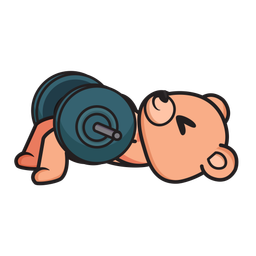
- Set up on a GHD so your ankles are secured and your knees rest just behind the pad, with your torso free to move.
- Start with your body in a straight line from head to knees, core braced and hips extended.
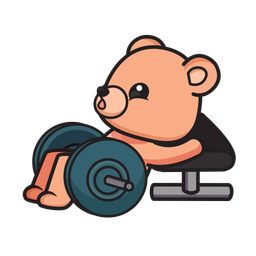
- Lower your torso forward under control, keeping a neutral spine and tension in the hamstrings.
- When you reach your current comfortable range, initiate the ascent by flexing the knees and extending the hips.
- Pull your body back to the starting line, squeezing glutes and hamstrings at the top without overextending the lower back.
- Repeat for controlled reps.
Benefits
- Builds hamstring strength through knee flexion and hip extension
- Improves posterior-chain development (glutes, hamstrings, spinal erectors)
- May help reduce hamstring strain risk when progressed appropriately
- Enhances trunk stiffness and control during hinging patterns
- Carries over to sprinting, jumping, and deadlift strength
Key Points
- Keep a neutral spine and ribs down; brace as if preparing to be poked in the belly.
- Move slowly on the way down; control is the goal.
- Drive the return by hamstrings and glutes, not by jerking with the lower back.
- Adjust pad position so knees are supported and you can move smoothly.
- Use assistance (band or hands) if you cannot maintain alignment.
Common Mistakes
- Hyperextending the lower back at the top instead of finishing with glutes
- Letting the hips pike or bending at the waist rather than staying long from head to knees
- Dropping too fast and bouncing out of the bottom
- Setting up with knees too far forward or backward on the pad, causing discomfort or poor leverage
- Using momentum or pulling with the arms excessively
Muscle Groups
Upper LegLower LegCoreGlutes